
What causes melasma during sun exposure — and how to treat it
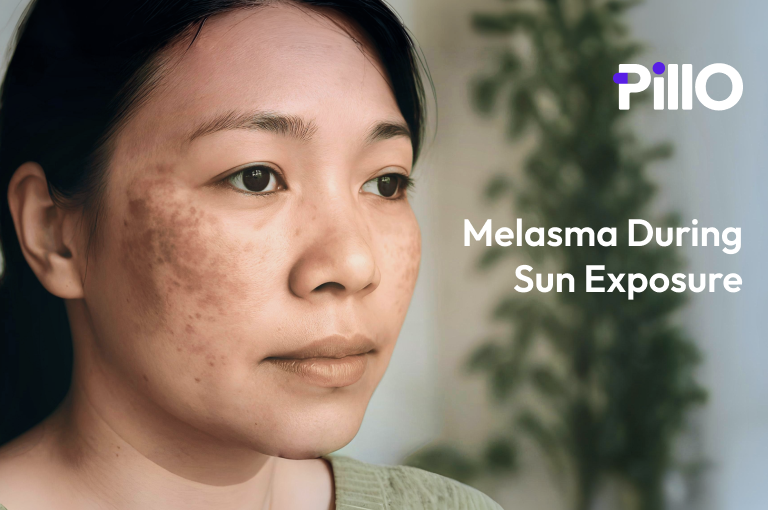
Have you ever noticed those brownish patches on your cheeks, forehead, or upper lip after some time in the sun, and wondered why this happens, what to do, and how you can treat it? Let’s talk about Melasma — in a friendly, human way — and also how using a service like PillO online medicine delivery apps in India can make a difference in getting the right medications quickly when you need them.
What is melasma?
Melasma is a skin condition where areas of your skin — especially face zones that get sun exposure — become darker (hyperpigmented). It often shows as brown or grey-brown patches, typically symmetric (both sides of the face).
Why does sun exposure trigger melasma?
Here’s the breakdown:
- Sunlight — especially ultraviolet (UV) rays — is a major player. UV radiation causes skin cells called melanocytes to produce more melanin (the pigment that gives skin its colour) as a protective reaction. source: Medscape
- Not only UV but visible light, heat, and even electronic screen light can make it worse. Once melanocytes are triggered, the pigment stays longer than a simple tan.
- Other triggers amplify the sun effect: hormonal changes (pregnancy, birth-control), genetics, darker skin types (which are more pigmented to begin with), and repeated sun exposure. Source: NCBI
Who, when & where?
- Who: Women are much more likely than men to develop melasma. People with medium to darker skin tones are more susceptible.
- When: Often during reproductive years, during pregnancy, or when starting/stopping hormonal contraception. Also, when you spend more time in the sun or move to a sun-intense location.
- Where: On sun-exposed face areas — cheeks, upper lip, forehead. If you live somewhere with strong sun (for example, India’s hot sunny days) you’re at higher risk.
Why is it stubborn?
Here’s the emotional part: It can feel frustrating. You might do a treatment and feel like you made no progress, or you see results, then the patches come back after a sunny outing. That’s because, unless you manage the sun + trigger exposure, treatments alone may not be enough. As one dermatologist said, “The sun is stronger than any medicine I can give you.”
Also Read: What Causes Skin Pigmentation and How to Treat It Fast?
How to treat melasma (action steps)
Here’s a practical plan you can follow:
1. Sun & light protection is the foundation
- Use a broad-spectrum sunscreen (blocks UVA & UVB) every day, even if you aren’t going outside much.
- Choose a sunscreen with physical blockers (e.g., zinc oxide, titanium dioxide) + if possible, one that offers protection against visible light or tinted formulas.
- Wear a wide-brimmed hat, sunglasses, seek shade, and avoid peak sunlight hours.
- Be aware of indoors too: windows let in visible/infrared light, and heat from devices or even car trips can contribute.
2. Topical medication (with dermatologist input)
- Your dermatologist may prescribe creams like Hydroquinone (bleaching agent), Azelaic acid, retinoids (like Tretinoin), or combination creams (e.g., hydroquinone + tretinoin + mild steroid).
- Example: If your doctor prescribes a cream for the brown patches, then starting it promptly and following usage is key.
- Always patch-test (because skin irritation can worsen pigmentation) and consult before pregnancy or if using hormones.
3. Address underlying triggers + lifestyle habits
- If hormones (pregnancy, OCPs) are involved, discuss with your doctor whether alternatives exist.
- Avoid skin-irritating treatments, aggressive waxing, strong exfoliants or harsh soaps — these can aggravate melasma.
- Maintain a gentle skincare routine, stay consistent.
4. Consider procedures (if needed) — carefully
- In more persistent cases, your dermatologist may recommend chemical peels, microneedling, or laser treatments. But these must be done by experienced specialists because the risk of worsening the melasma is real.
5. Be realistic & consistent
- Melasma doesn’t vanish overnight. Treatment takes months, and outcomes depend on maintaining sun protection + medication.
- Relapses are possible — so think of this as a long-term skin management plan, not a quick fix.
How PillO helps you stay on track
Here’s where PillO (your trusted fast medicine delivery app) comes in:
- If your dermatologist prescribes a topical like hydroquinone or azelaic acid, you want to order it immediately — because starting as soon as possible gives better results.
- If you search for 60-minute medicine delivery in your city (e.g., Ahmedabad), a service like PillO can ensure your skin regimen doesn’t get delayed.
- When your medication is running low, or you need an alternative due to sun flare-up, PillO helps you maintain the continuity of care so that you don’t take a break and risk rebound.
- In short, PillO supports not just convenience but skin-health discipline, which in melasma management often makes the difference.
Which medicines to know about
Here are some of the commonly used treatments your dermatologist may mention:
- Hydroquinone (topical bleaching agent)
- Azelaic acid (safe alternative)
- Tretinoin (topical retinoid)
- Combination creams (hydroquinone + tretinoin + mild steroid)
- Plus sunscreen with physical blockers (zinc oxide/titanium dioxide) as a non-medication essential.
Conclusion
If you’ve spotted those uneven dark patches on your face and wondered “Why now?”, now you know: sun exposure is the main trigger, and your best defence is sun-smart habits + dermatologist-guided treatment.
It’s not about one magic cream; it’s about a system: protecting your skin, treating it correctly, and sticking to the plan. And while you’re doing all that, remember that services like PillO (urgent, immediate, fast medicine delivery) help you maintain the momentum — no delays, no missed doses, no interruption to your regimen.
Because when melasma flares, you don’t want to wait. Stick with it, be consistent—and give your skin the chance it deserves to gradually even out.